Makeup is more than just applying beauty products. It is a way to express your personality, boost confidence, and enhance your natural features. Some people wear makeup every day, while others use it only for special occasions. There is no right or wrong way to wear makeup. The most important thing is to feel comfortable and confident in your own skin.
Today, the beauty industry offers a wide range of makeup products for every skin type, skin tone, and age group. Whether you are a beginner or someone who wants to improve your makeup skills, understanding the basics can help you achieve a natural and beautiful too.
Know Your Skin Type
Before buying any makeup product, it is important to know your skin type. Choosing the right products makes makeup look smoother and last longer.
There are four common skin types:
- Oily Skin
- Dry Skin
- Combination Skin
- Normal Skin
People with oily skin should choose oil-free and matte products, while dry skin needs moisturizing and hydrating makeup products.
Essential Makeup Products
If you are just starting your makeup journey, you don’t need a large collection. A few basic products are enough to create a simple everyday look.
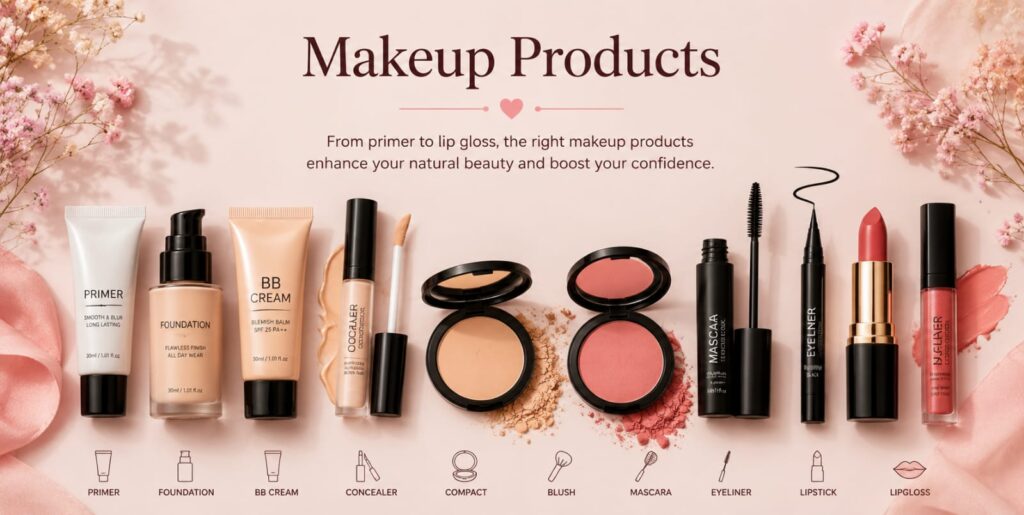
Some essential makeup products include:
- Primer
- Foundation or BB Cream
- Concealer
- Compact Powder
- Blush
- Mascara
- Eyeliner
- Lipstick or Lip Gloss
These products help create a fresh and polished appearance without making makeup look heavy.
Choosing the Right Foundation
Foundation should match your natural skin tone. Testing foundation on your jawline instead of your hand gives better results.
There are different types of foundation available:
- Liquid Foundation
- Cream Foundation
- Stick Foundation
- Powder Foundation
Choose the formula according to your skin type and the coverage you need.
Steps for a Basic Makeup Routine
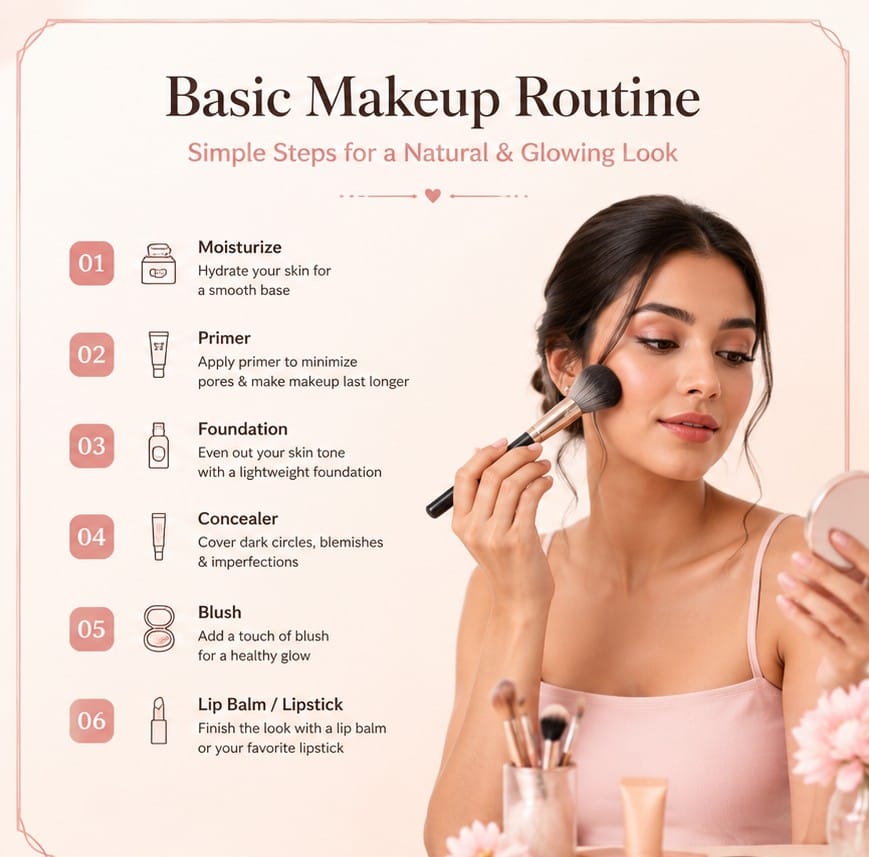
- Apply a primer to create a smooth base. Primer helps makeup stay in place for a longer time.
- Apply foundation or BB cream evenly using a sponge, brush, or fingertips. Blend it carefully around the jawline and neck to avoid uneven patches.
- Use concealer to hide dark circles, acne marks, or blemishes. Blend gently without rubbing.
- Set your makeup with compact powder. This helps reduce shine and keeps makeup fresh.
- Apply blush on the cheeks for a healthy glow. Choose soft shades for a natural finish.
- Define your eyes using eyeliner and mascara. Even a small amount of mascara can make your eyes appear bigger and brighter.
- Finish your makeup with your favorite lipstick or lip gloss. Nude shades work well for everyday wear, while bold colors are perfect for parties.
Removing Makeup Properly
Removing makeup is just as important as applying it. Sleeping with makeup can clog pores and cause pimples and make the skin look dull.
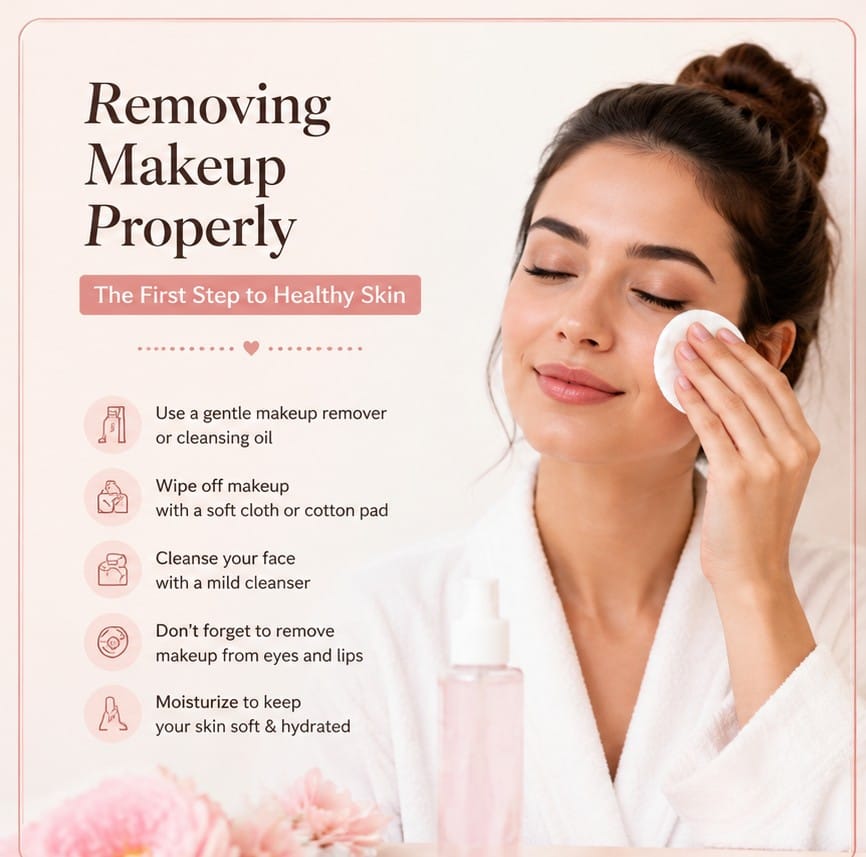
Use a gentle makeup remover or cleansing product to remove all traces of makeup, then wash your face and apply moisturizer to keep your skin fresh and hydrated
Benefits of Makeup
Makeup offers several benefits beyond beauty.
- Enhances natural features.
- Boosts self-confidence.
- Helps create different looks for different occasions.
- Allows creative self-expression.
- Makes people feel more prepared for important events.
When used correctly, makeup can be a fun and enjoyable part of a daily routine.
Common Makeup Mistakes
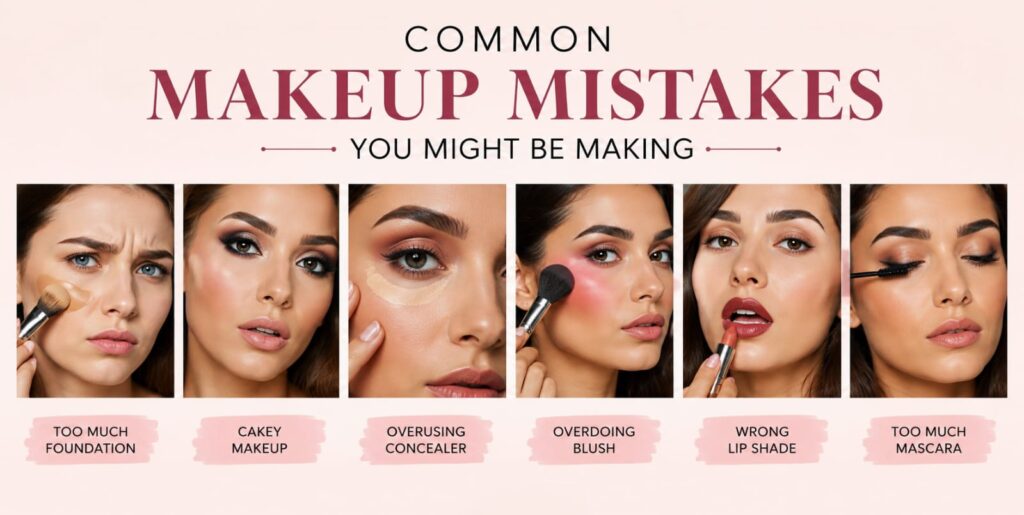
- Using Too Much Foundation: Apply a thin layer and build coverage only where needed for a natural finish.
- Choosing the Wrong Foundation Shade: Always match your foundation to your jawline and skin undertone.
- Applying Excess Concealer: Too much concealer can settle into fine lines and make the under-eye area look heavy.
- Overdoing Blush: Use a small amount of blush and blend it well for a fresh, healthy glow.
- Picking the Wrong Lip Shade: Choose lip colors that complement your skin tone and the overall makeup look.
- Applying Too Much Mascara: One or two coats are enough. Too many coats can make lashes look clumpy.
- Skipping Primer: A primer helps makeup stay longer and creates a smooth base for foundation.
- Not Blending Properly: Blend foundation, concealer, blush, and eyeshadow evenly to avoid harsh lines.
- Ignoring Skin Preparation: Cleanse and moisturize your skin before makeup for a smoother and long-lasting finish.
- Forgetting to Set Makeup: Finish with a setting powder or setting spray to keep your makeup fresh throughout the day.
Conclusion
Avoiding common makeup mistakes can make a big difference in your overall look. Start with the right products, apply makeup in light layers, and blend everything well. With regular practice and the right techniques, beginners can achieve a flawless, natural, and long-lasting makeup look with confidence.